I still remember the first email list I ever built.
It had 37 subscribers. I checked the dashboard every day like something magical would happen. Nothing did… until I actually sent useful emails.
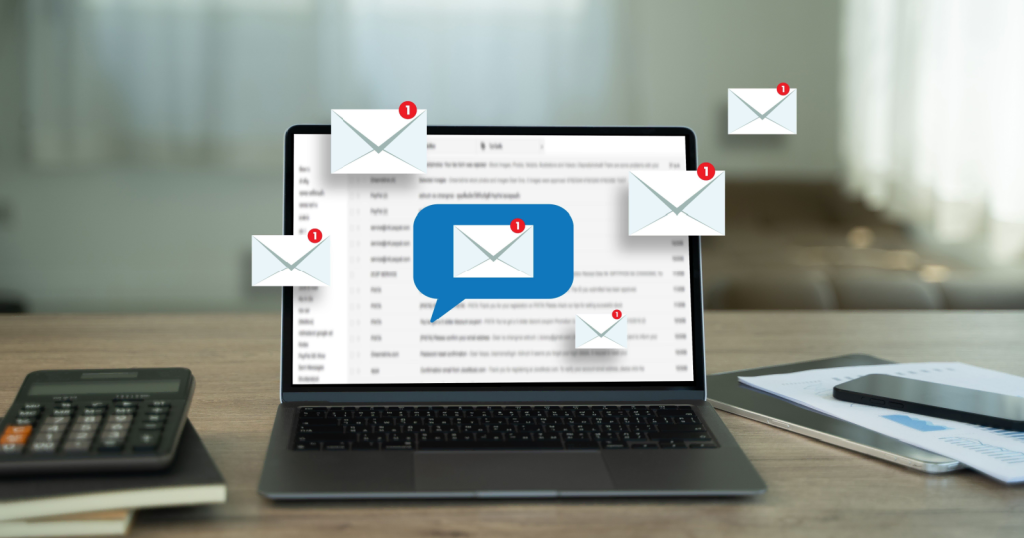
Fast forward a few years, and email marketing is still one of the highest-ROI channels for small businesses. In fact, studies consistently show email delivers around $36–$40 for every $1 spent. That’s wild. And yet, so many small businesses struggle with it—not because email is dead, but because they’re using the wrong tools.
This guide breaks down the best email marketing tools for small businesses in 2026, based on real use, real mistakes, and real wins. I’ll explain who each tool is best for, where they shine, where they fall short, and how to choose without wasting money or time.
Let’s get into it.
What Small Businesses Should Look for in an Email Marketing Tool
Before jumping into tools, let me say this:
There is no “best” email marketing platform for everyone. I learned that the expensive way—by switching tools too often.
Here’s what actually matters for small businesses:
First, ease of use. If the dashboard feels overwhelming on day one, it won’t magically get better. Most small business owners don’t have time to fight software.
Second, automation. Even basic automations—welcome emails, abandoned carts, follow-ups—save insane amounts of time. Manual emailing doesn’t scale. I tried. It burned me out.
Third, deliverability. This one’s invisible until it hurts. If emails land in spam, nothing else matters. Period.
Fourth, pricing that scales reasonably. Many tools start cheap, then spike aggressively as your list grows. That surprise hurts.
Finally, support and integrations. When something breaks, you need help fast. And the tool should connect smoothly with your website, CRM, or ecommerce platform.
Keep those in mind as we review the tools below.
Best Overall Email Marketing Tool for Small Businesses: MailerLite
If I had to recommend one tool for most small businesses, it would still be MailerLite.
I’ve used it for service businesses, content sites, and even small ecommerce stores. It hits the sweet spot between power and simplicity.
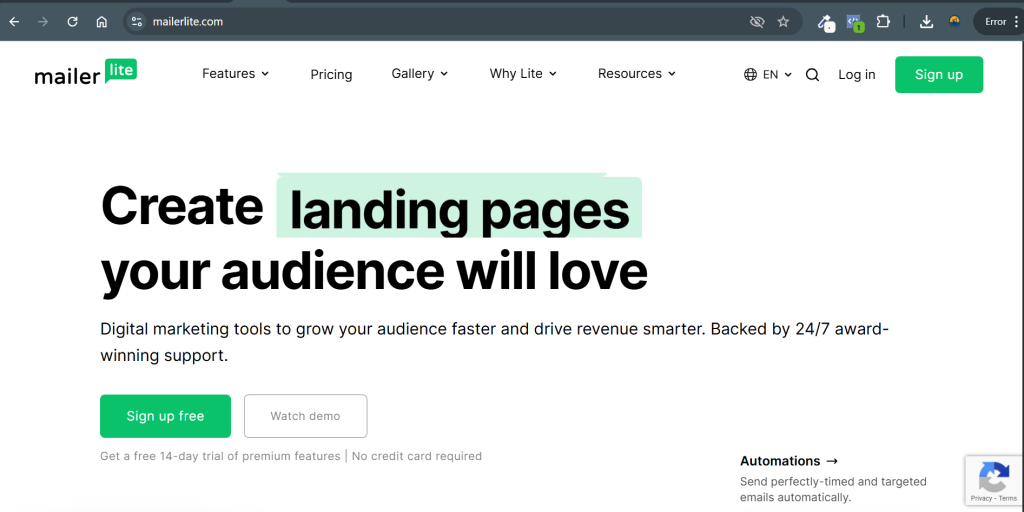
What I like most is how clean and calm the interface feels. No clutter. No unnecessary features shoved in your face. You can build campaigns, forms, landing pages, and automations without feeling dumb—and that matters.
MailerLite’s automation builder is visual and intuitive. Setting up a welcome sequence or lead magnet delivery takes minutes, not hours. And deliverability has been consistently solid in my experience.
Where it falls short? Advanced segmentation and reporting aren’t as deep as enterprise tools. But for small businesses, that’s rarely a deal-breaker.
Best for:
Service businesses, bloggers, consultants, local businesses, startups
Best Email Marketing Tool for Ecommerce: Klaviyo
Klaviyo is a different beast.
This is the tool I reach for when email marketing is tightly connected to sales behavior—purchases, browsing history, abandoned carts, repeat customers.
The level of data Klaviyo gives you is honestly impressive. You can trigger emails based on very specific actions. I’ve seen ecommerce revenue jump just from setting up a few smart flows.
That said, Klaviyo is not beginner-friendly. The dashboard is dense, and pricing climbs fast as your list grows. I’ve seen small stores sign up, panic, and cancel within a week.
If you’re serious about ecommerce and ready to invest time (and budget), Klaviyo pays off. If not, it’s overkill.
Best for:
Shopify stores, WooCommerce shops, ecommerce brands
Best Budget-Friendly Email Marketing Tool: Brevo (formerly Sendinblue)
Brevo doesn’t get enough credit.
What makes Brevo different is its email sending model. Instead of charging primarily by list size, it focuses on emails sent per day, which can be a huge win for small lists with frequent campaigns.
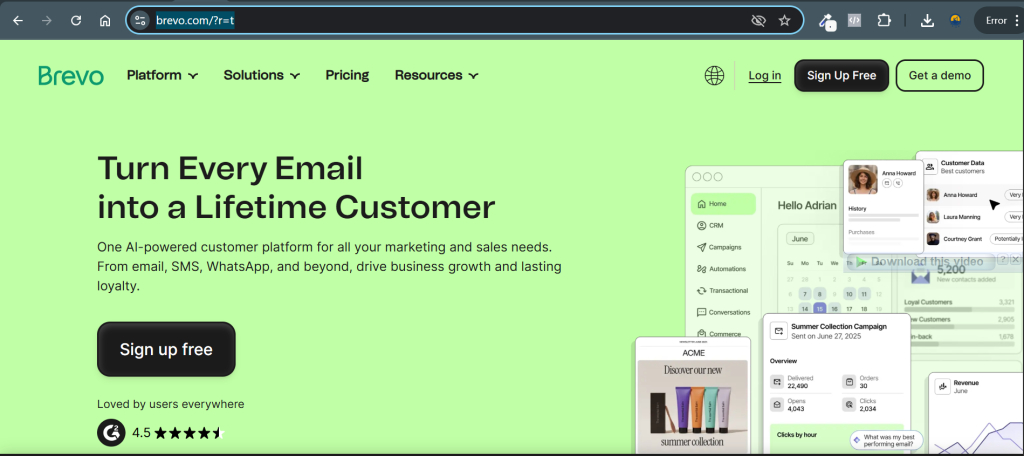
It also includes SMS marketing, basic CRM features, and automation—all in one platform. I’ve used it for local businesses that wanted email and SMS reminders without juggling tools.
The interface isn’t as polished as MailerLite, and the editor can feel clunky at times. But for the price, it’s hard to complain.
Best for:
Small businesses on a tight budget, local businesses, SMS + email use cases
Best All-in-One Marketing Platform: GetResponse
GetResponse feels like a toolkit that keeps expanding.
Email marketing is just one part of it. You also get landing pages, webinars, funnels, automation, and even basic ecommerce tools. For some businesses, that’s a blessing. For others, it’s overwhelming.
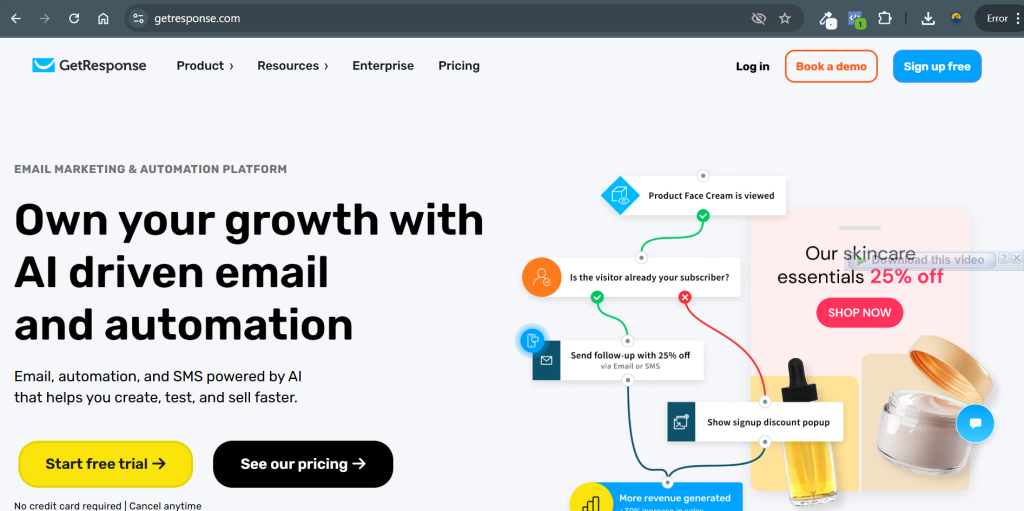
I’ve used GetResponse when I wanted everything under one roof. The automation features are strong, and the funnel builder is genuinely useful if you don’t want to stitch tools together.
The downside? Some features feel bolted on rather than deeply refined. And pricing increases as you unlock advanced options.
Best for:
Businesses that want funnels, webinars, and email in one platform
Best for Advanced Automation & CRM Integration: ActiveCampaign
ActiveCampaign is powerful. Like, really powerful.
If you love segmentation, tagging, behavior-based automation, and CRM-style workflows, this tool is a dream. I’ve built complex automation chains in ActiveCampaign that felt almost unfair.
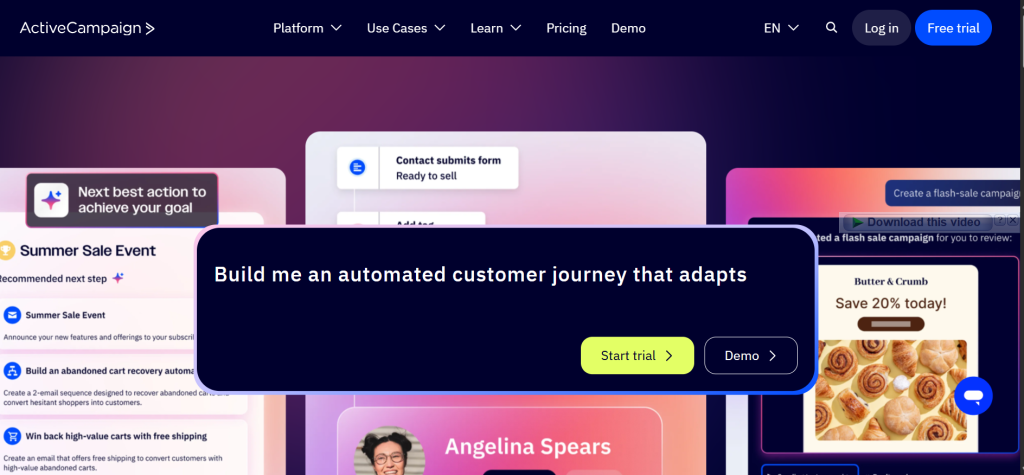
But here’s the truth: it has a learning curve. A real one. And it’s not cheap.
For small businesses with sales teams or longer customer journeys, it can be a game changer. For solo founders or beginners, it might be too much too soon.
Best for:
B2B businesses, agencies, sales-driven teams, advanced marketers
Best Email Marketing Tools Comparison (Quick Overview)
Here’s the short version, because sometimes you just want clarity:
- MailerLite – Best overall balance of simplicity and power
- Klaviyo – Best for ecommerce and data-driven email marketing
- Brevo – Best for tight budgets and SMS + email
- GetResponse – Best all-in-one marketing platform
- ActiveCampaign – Best for advanced automation and CRM
Common Email Marketing Mistakes Small Businesses Still Make
I’ve made all of these. More than once.
First, buying email lists. Just don’t. Deliverability gets wrecked, trust is gone, and results are terrible.
Second, sending emails without a clear purpose. If the email doesn’t educate, sell, or help, why send it?
Third, ignoring mobile optimization. Most people read emails on their phones. If it looks bad there, it is bad.
Fourth, over-emailing. Daily emails work for some brands, but most small businesses burn subscribers fast doing this.
Finally, not tracking results. Open rates, click rates, conversions—these tell you what’s working. Guessing doesn’t scale.
How to Choose the Right Email Marketing Tool for Your Business
Here’s my honest advice.
Start with the simplest tool that meets your current needs. Not future fantasies. Not “what big brands use.” What you can realistically manage today.
Ask yourself:
- Do I sell products or services?
- How complex are my email needs right now?
- What’s my budget for the next 6–12 months?
- Will I actually use automation?
You can always upgrade later. Switching tools is annoying, but starting with the wrong one is worse.
Final Thoughts
Email marketing isn’t about flashy tools. It’s about consistent communication with people who chose to hear from you. The right platform makes that easier, smoother, and more profitable.
In 2026, small businesses that win with email are the ones that:
- Choose tools intentionally
- Focus on value, not volume
- Use automation without losing the human touch
If you’re just starting, keep it simple. If you’re scaling, invest wisely. And remember—tools don’t build relationships. You do.
If you’ve used any of these email marketing tools (or had a bad experience with one), share it. Those real stories help more than any feature list ever could.