Mastering the Core Pillars of H-E-E-A-T for Bloggers
Man, if I could give you one piece of advice that changes everything about your SEO for bloggers strategy in 2026, it would be this: stop thinking about keywords first and start thinking about H-E-E-A-T. You might remember the old E-A-T framework—Expertise, Authoritativeness, and Trustworthiness. Well, Google officially evolved that into H-E-E-A-T, adding a crucial “H” for Helpfulness and another “E” for Experience. And let me tell you, this isn’t just some tech jargon. I learned this the hard way when one of my old finance blogs—a site I’d poured years into—took a massive hit back in the late 2020s. I had all the right keywords, the links were decent, but I wasn’t injecting my actual experience into the content. I was just rewriting what everyone else was saying. Big mistake!
The shift to H-E-E-A-T is Google’s direct response to the massive influx of generic, often low-quality, AI-generated content that started flooding the web a few years ago. Google wants to reward content that a human genuinely wrote because they have real-world knowledge. Helpfulness and Experience are now the two pillars that truly separate the signal from the noise. I mean, think about it: if you’re searching for “how to fix a leaky faucet,” do you want a generalized, encyclopedia-style answer, or do you want a step-by-step guide written by someone who has actually been under their sink, busted a knuckle, and figured out the one tricky little part that no one else mentions? Obviously, you want the latter! That’s the essence of what H-E-E-A-T demands.
Injecting Real-Life Experience to Differentiate Content

This is where you, the blogger, have the biggest advantage over AI. The “E” for Experience means you need to show that you’ve personally done, used, or visited whatever you are writing about. For example, I have a travel blog, and for years I would write guides based purely on research. My content was okay, but it didn’t rank well. Then, I wrote a post titled, “The One Day I Spent Lost in Tokyo Station (and the 3 Apps That Saved Me).” Suddenly, that article shot up the rankings. Why? Because the experience was unique, it was tangible, and it had a genuine tone of frustration and eventual triumph. I provided specific details, like the name of the exit I shouldn’t have taken (the Yaesu Central Exit, by the way—never go there if you’re trying to get to the Shinkansen!), and a screenshot of the exact Google Maps view that finally made sense. Anecdotes and original observations are your secret weapon for topical authority.
To make your content H-E-E-A-T compliant, you need to ask yourself these questions for every post:
| H-E-E-A-T Pillar | What It Means for Bloggers | Actionable Content Step |
| Helpfulness (H) | Does the content directly and fully solve the user’s problem? | Structure the post for Featured Snippets; answer the core question in the first paragraph. |
| Experience (E) | Is the content based on firsthand knowledge or actual use? | Include personal anecdotes, original photos, or data you collected yourself. |
| Expertise (E) | Do you have the necessary knowledge to write on this topic? | Link to your credentials or training; cite actual studies or data. |
| Authoritativeness (A) | Is your blog recognized as a go-to source in your niche? | Get reputable backlinks; mention experts in the field; build topic clusters. |
| Trustworthiness (T) | Is the site safe, transparent, and accurate? | Maintain a privacy policy; use HTTPS; link to high-authority sources; correct errors immediately. |
It’s not just about what you write; it’s about what signals you send to Google’s Quality Raters. I’m telling you, even something as simple as including a photo of your own kitchen when writing a recipe, instead of a stock photo, can be a game-changer. It shows that you actually cooked the dish!
The Importance of Boosting Trustworthiness
Another area where I saw a huge impact was with the Trustworthiness and Authoritativeness aspects. When I started my current SEO blog, I made sure my “About Me” page was incredibly detailed. I didn’t just say “I’m an SEO expert.” Nope. I listed specific certifications I’d gotten, the niche sites I’d successfully built and sold, and even included a few LinkedIn recommendations. This is critical. You need to present yourself and your site as a credible source of information. Google needs to know they can stake their reputation on your advice. One thing I’ve found that works really well is transparently linking to your sources, especially when discussing facts or data. Don’t be afraid to link out to competitors or high-authority sites like government reports or university studies. It doesn’t hurt your rankings; it actually boosts your Trustworthiness by showing you did your homework.
In 2026, with the increasing use of AI to generate summaries right on the SERP (Search Engine Results Page), being the trustworthy source that the AI pulls from is the only way to win. If you’re publishing generic, unoriginal content, Google’s SGE (Search Generative Experience) will just synthesize something from better, more trusted sources, and your blog won’t even get the click. So, focus on creating content so demonstrably excellent, helpful, and experienced-based that Google has no choice but to rely on your unique insights. This is the foundation of a successful SEO for bloggers strategy going forward. It really is the ultimate competitive edge.
The Shift from Keywords to Topic Clusters and Semantic SEO
I remember the “good old days” of SEO—not really that good, actually—when all you did was find a high-volume long-tail keyword, cram it into the article a few times, get a couple of links, and boom, you were ranking. Honestly, those days are long gone, thank goodness! Trying to chase single keywords now is like trying to catch fish with a single piece of string in the middle of the ocean. It’s just inefficient. The biggest shift in SEO for bloggers today, and certainly heading into 2026, is moving from focusing on individual keywords to building topic clusters and embracing Semantic SEO. This is where true topical authority comes from.

I realized I needed to change my approach dramatically a couple of years ago when I launched a blog focused on sustainable living. I wrote 30 individual articles on things like “best reusable water bottle,” “how to compost banana peels,” and “DIY cleaning solutions.” Each article was decent, but they were all sitting at page 3 or 4 of Google. They just weren’t connected! Then, I read up on the topic cluster model and had one of those “aha!” moments. I took a step back and created a massive, comprehensive Pillar Page—I called it “The Ultimate Guide to Zero-Waste Home Living.” All 30 of those smaller articles suddenly became my Cluster Content, and I linked them all back to that main Pillar Page. What happened next blew my mind: within two months, the main Pillar Page shot up to the top 5 for several major search terms, and the cluster articles all started ranking better too!
Strategy Implementation: Mapping Your Topic Clusters
The core concept is simple but incredibly powerful: Instead of writing 10 random articles, you write 10 related articles that all support one central, authoritative piece of content. This signals to Google that you don’t just know about one tiny aspect of a subject (like a single keyword); you know about the entire topic. You are the authority!
Here is how I recommend you start mapping your first topic cluster:
- Identify Your Main Pillar Topic: Choose a broad, high-level topic relevant to your niche. (e.g., For a finance blog: “Complete Guide to Personal Investing.”). This topic should be broad enough to sustain at least 15-20 related articles.
- Determine Cluster Subtopics: Brainstorm 5-10 specific, related subtopics that fall under that pillar. These will be your Cluster Content. (e.g., Subtopics: “How to Choose the Right Index Fund,” “Understanding ETF vs. Mutual Funds,” “Tax Implications of Stock Trading.”).
- Create the Pillar Page: Write a comprehensive, long-form guide (often 3,000+ words) for the main topic. This page should provide high-level answers and act as a hub.
- Create Cluster Content: Write detailed, specific articles (usually 1,000-2,000 words) for each subtopic.
- Master the Internal Linking: This is crucial! Every cluster article must link directly to the Pillar Page using the main keyword/topic as the anchor text. The Pillar Page should also link out to all the cluster articles. This distributes ‘link juice’ and establishes the relationship between all the pieces of content for the search engine bots.
| Cluster Component | Purpose | Key Metric |
| Pillar Page | Establish broad authority on a topic. | Ranking for competitive, general terms. |
| Cluster Content | Rank for specific, long-tail questions (high intent). | Conversions, low bounce rate, high time on page. |
| Internal Links | Show search engines the relationship between content. | Improved crawl rate, distributed page authority. |
The Power of Semantic Keywords and Entities
This whole process ties directly into Semantic SEO. It’s not just about using the main keyword; it’s about using all the related words, concepts, and entities that naturally surround that topic. When you write about “Personal Investing,” you must mention things like diversification, risk tolerance, compound interest, IRA, and 401(k). These aren’t just extra keywords; they are semantic keywords that prove to Google that your content is contextually complete.
I use tools like SurferSEO or even just looking at the “People Also Ask” and “Related Searches” on Google to identify these Latent Semantic Indexing (LSI) keywords.
This process helps you cover the topic so thoroughly that Google sees your article as the definitive answer, not just a keyword target. For instance, when writing about ETFs (a cluster topic), I make sure to explicitly define the difference between an ETF and a Mutual Fund using specific entity language. Doing this doesn’t just help search engines; it makes your content genuinely more Helpful for the reader, which loops us right back to the H-E-E-A-T framework! This is how you stop competing on volume and start winning on depth, ensuring your SEO for bloggers strategy is built to last.
Technical SEO Essentials for Bloggers in 2026
Alright, we’ve covered the crucial content quality side with H-E-E-A-T and how to structure your expertise with topic clusters. Now, let’s talk about the foundation: Technical SEO. Look, I know what you’re thinking—this is the boring stuff, the jargon-filled mess that makes your eyes glaze over. I get it! I avoided it for years, convinced that as long as my writing was good, the tech stuff didn’t matter much. That was a serious blunder, my friend. I had one blog where the content was killer, but the site took, like, six seconds to load on mobile. It was painful! When Google rolled out a major Core Web Vitals update, that site tanked so hard I thought I’d broken the internet. It was a frustrating lesson, but it taught me that SEO for bloggers in 2026 demands a strong, fast technical foundation.
Google uses your site’s technical performance to gauge user experience, and those signals are now ranking factors. If a reader clicks your link and has a frustrating experience—it loads slowly, the buttons jump around, or it looks terrible on their phone—Google sees that high bounce rate and low time-on-page and says, “Nope, not a good result.”
The Non-Negotiable Core Web Vitals
The most critical technical element you need to master is Core Web Vitals (CWV). These three metrics are Google’s way of measuring the quality of the user experience. You absolutely have to get these in the green zone:
- Largest Contentful Paint (LCP): This measures how long it takes for the largest visual element on your page (usually an image or a main text block) to fully load. Goal: Under 2.5 seconds. If your LCP is slow, users are waiting too long to see the main content. Actionable Tip: Compress those high-resolution hero images! I switched to using the WebP image format, and my LCP dropped by nearly a second across the board. Huge win!
- First Input Delay (FID) / Interaction to Next Paint (INP): FID measures the time from when a user first interacts with a page (like clicking a button) to the time the browser is actually able to respond. Google is replacing FID with Interaction to Next Paint (INP) in 2024, which is a better overall measure of responsiveness. Goal: INP under 200 milliseconds. Actionable Tip: This is often caused by heavy, unoptimized JavaScript loading in the background. If you’re using WordPress, audit your plugins. I discovered one old carousel plugin was completely crippling my INP score! I removed it, and the responsiveness of my site skyrocketed.
- Cumulative Layout Shift (CLS): This measures visual stability. Have you ever clicked a button only to have an ad load and push the button out of the way, causing you to click the wrong thing? That’s high CLS, and it’s super annoying. Goal: A score of 0.1 or less. Actionable Tip: For images and embeds, always specify the width and height attributes in the code. This reserves the space before the item fully loads, preventing those jerky shifts.
Mobile-First Indexing and Rich Results
Remember, Google operates on a mobile-first indexing system. They primarily use the mobile version of your content for ranking and indexing. This means if your blog is clunky or slow on a phone, it doesn’t matter how beautiful it looks on a desktop—you’re going to suffer. You need to ensure your theme is fully responsive and that all your content, including those fancy tables and images, is easily viewable and usable on a small screen. I make it a habit to use Google’s Mobile-Friendly Test tool for every new template or major design change.
Finally, let’s talk about Schema Markup. This is essentially code (structured data) you add to your blog post HTML that tells search engines exactly what your content is about. It helps your content qualify for those eye-catching Rich Results (like star ratings, FAQ accordions, and ‘How-To’ steps) that dramatically increase your click-through rate (CTR) on the search results page.
FACT: Articles with Rich Results can see a CTR increase of up to 30% compared to standard blue-link results, simply because they take up more screen real estate and look more authoritative.
I strongly recommend using specific schema types where applicable: Article Schema for your regular posts, HowTo Schema for tutorials, and FAQ Schema for sections where you answer multiple related questions. Many SEO plugins can help you implement this structured data easily, but knowing why you’re doing it is the essential part of truly winning at SEO for bloggers. Don’t ignore the tech details—they are the fuel that powers your high-quality content to the top!
Off-Page SEO & Authority Building: The New Link Strategies
When I first started blogging, the advice on Off-Page SEO was simple (and kind of exhausting): get as many backlinks as possible. It was a numbers game, a relentless scramble to get any website, no matter how sketchy, to point a link at your content. We called it “link building,” but honestly, it was often more like link begging. That old-school approach is not only dead but can actively harm your site now. If you’re serious about SEO for bloggers in 2026, you must shift your focus from simply chasing links to Authority Building.
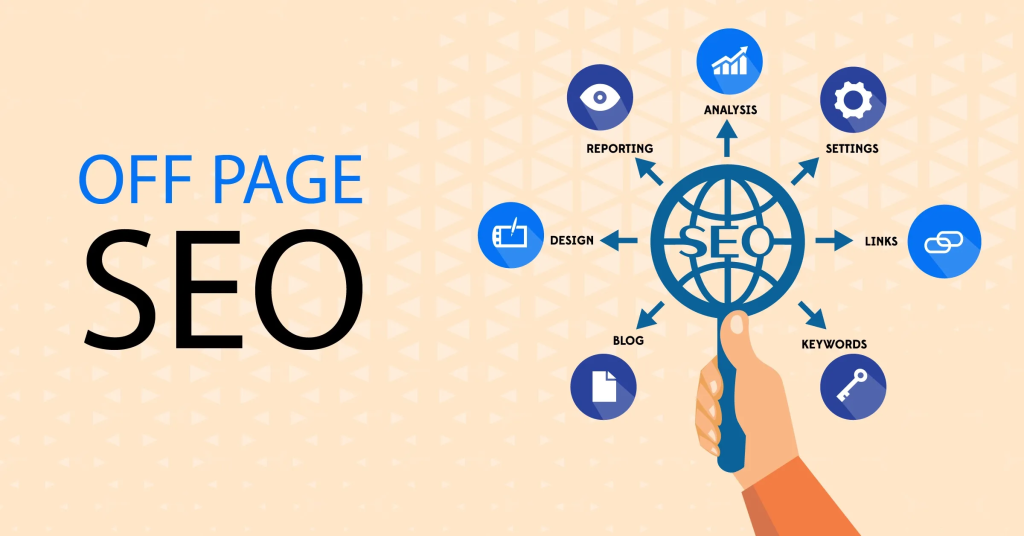
Google’s sophisticated algorithm, especially with its emphasis on the H-E-E-A-T framework, can easily sniff out artificial or low-quality links. What they reward now is genuine validation and signals of a strong brand. Think of it this way: a single backlink from a highly respected industry publication (which might take weeks of effort to earn) is worth more than 50 links from random, forgotten web directories. It’s truly quality over quantity now, and that’s a relief, honestly, because it means we can focus our time on creating stuff people actually want to link to. Learn More
Quality Over Quantity: Earning High-Authority Backlinks
The best links are the ones you earn, not the ones you beg for. These are often called “earned media” or digital PR links. The strategy here is to create truly unique content that journalists, academics, or other industry leaders will naturally want to reference. I learned this lesson clearly when I wrote an extensive, data-heavy post debunking a common myth in my niche. I didn’t just share my opinion; I compiled survey data from over 500 people, organized it into clear tables, and presented the findings in a sharp, easy-to-digest infographic.
- Result: Three different well-known publications in the industry linked to my post as their primary source of data. That’s three extremely high-authority links earned from one piece of truly unique content!
Actionable Strategy: Create “Linkable Assets”
To succeed at off-page SEO, dedicate time to creating Linkable Assets. These are resources so valuable that people in your niche feel compelled to link to them.
| Linkable Asset Type | Example | SEO Benefit |
| Original Data/Studies | “The 2026 State of Remote Work Survey” (with charts) | Cited by news outlets; boosts Expertise. |
| Definitive Guides | “The Complete A-Z Glossary of Renewable Energy Terms” | Used as a constant reference point; boosts Authoritativeness. |
| Free Tools/Calculators | A custom mortgage calculator or a headline analyzer. | People link to tools constantly; generates passive backlinks. |
| Case Studies | “How I Increased My Blog Traffic by 40% Using Topic Clusters” | Provides concrete proof and social validation. |
Building Authority Through Branded Search Volume
Here’s a subtler, but increasingly powerful, aspect of off-page SEO: Branded Search Volume. When Google assesses your blog’s authority, it doesn’t just look at links; it looks at how often people search specifically for your brand name or your brand name combined with a keyword. For example, searches like “YourBlogName SEO tips” or “YourBlogName review.”
This signals to Google that you are a recognized entity and a trusted resource. It’s a huge Trustworthiness signal.
How do you encourage Branded Search Volume?
- Consistent Naming: Use a memorable, easy-to-spell brand name and use it consistently across all platforms (social media, podcast, YouTube).
- Calls to Action (CTAs): At the end of content or in videos, explicitly ask people to search for you. “To learn more about this, just Google ‘YourBlogName topic clusters’!”
- Guest Appearances: When you appear on a podcast or webinar, make sure they mention your blog name multiple times, encouraging listeners to look it up.
- Social Media Engagement: Drive social media followers to search for your content on Google, rather than linking directly. This trains them to use your brand name in their search queries.
By focusing on this modern, holistic approach to off-page SEO, you move beyond the tedious link chase. You are now building a genuine, recognizable brand that Google recognizes as a true leader in its niche, which is the most sustainable way to secure those top spots in the SERPs.
Optimizing for AI Overviews and the Future of Search (SGE)
Let’s be real: the biggest shake-up in SEO for bloggers right now is the rise of AI in search results. I’m talking about the AI Overviews (formerly part of the Search Generative Experience, or SGE) that Google displays right at the top of the search engine results page (SERP). When these first started showing up, a lot of bloggers panicked. They thought, “Wait, if Google just gives the answer, why would anyone click my link?” It’s a valid fear! But here’s the truth I’ve learned: The AI has to get its information from somewhere. Our goal now is to be the trusted, cited source that the AI uses to generate its overview.
The key to succeeding here is to understand that the AI rewards content that is factual, concise, and structured logically. When the AI pulls an answer, it often takes highly specific sentences or bulleted lists from the source material. So, if you want your content to be featured and cited in that highly visible box, you need to structure your answers like you’re writing for an intelligent machine—but still keep the H-E-E-A-T for the human reader!
Writing Concise, Factual Content for Direct Answers
To optimize for AI Overviews, you need to practice the art of the Direct Answer. When you start a blog post or a section within a post, immediately answer the user’s core query in a precise, easy-to-extract manner.
Bad Example (Too verbose): “When it comes to figuring out the ideal content length for a blog post, there’s a lot of debate among SEO professionals, but many experts have found through extensive research that longer posts tend to perform better overall in terms of rankings…”
Good Example (Direct Answer Optimized): “The ideal content length for a high-ranking blog post is generally between 1,500 and 2,500 words for competitive topics. This length allows for deep coverage of the subject, supporting topical authority by including all necessary semantic keywords and entities.”
See the difference? The “Good Example” provides a specific, bolded answer right away. I always try to include a summary box or a short, bolded section right after my main introduction to house these direct answers. This makes it super easy for the AI to grab the essential data points.
Voice Search and Conversational Queries
The rise of AI-driven search also ties into Voice Search SEO. People talking to their smart devices and phones ask conversational, question-based queries (e.g., “Hey Google, what are the five best places to visit in Portugal?”). Your blog posts must be optimized to answer these natural-language questions.
Optimization Checklist for Conversational Queries:
- Use Headings as Questions: Phrase your H2s and H3s as questions your audience might ask (e.g., “How Do I Create a Topic Cluster?”).
- Provide Numbered/Bulleted Lists: AI loves lists. If you’re giving steps, use a numbered list. If you’re listing benefits, use bullet points. This helps structure the data cleanly.
- Include Full Sentences: Unlike traditional keywords, voice search relies on complete, grammatically correct sentences, which you should use to phrase your direct answers.
The Impact on CTR and Monetization Strategies
I’m not going to sugarcoat it: AI Overviews can reduce your organic click-through rate (CTR), especially for simple, factual queries, because the user gets the answer without clicking. This necessitates an evolution in your monetization and traffic strategy.
If you find that your overall traffic is leveling out, but your visibility is high (meaning you’re appearing in AI Overviews often), you need to double down on building assets that you control, like your email list.
| SGE Impact Challenge | SEO Adaptation Strategy | Goal |
| Reduced CTR | Integrate more compelling, personalized CTAs for high-intent queries. | Drive clicks on complex, “next step” articles. |
| Answer in SERP | Focus on “Gated Content” and lead magnets (e.g., a free PDF checklist). | Capture email addresses even if the user doesn’t click the core article. |
| Simple Queries Solved | Pivot content strategy to complex, “Why” and “How-To” questions requiring depth. | Ensure ranking content can’t be fully summarized in a few sentences. |
By optimizing for structured data, crafting direct answers, and recognizing that your blog is now training the AI, you ensure your content—and your brand’s Expertise—is what’s getting highlighted in the future of search. It’s all about maintaining that authority and ensuring you are the definitive, helpful source!
Conclusion: Your 2026 SEO Action Plan
Wow! We’ve really done a deep dive into what it takes to win at SEO for bloggers in the modern search landscape. If you take away anything from this ultimate guide, let it be this: Google is rewarding quality, trust, and comprehensive user experience more than ever before. The days of simple keyword stuffing are definitively over. The future belongs to the bloggers who are willing to put in the effort to prove their H-E-E-A-T (Helpfulness, Experience, Expertise, Authoritativeness, and Trustworthiness).
We started by discussing how vital it is to inject your unique experience into every piece of content to stand out from the AI noise. Remember, your personal anecdotes and original data are your unique competitive advantage! We then transitioned into building topical authority using the topic cluster model, which is the only way to signal to Google that you are a genuine expert in your niche, not just someone who writes about random related keywords. And let’s not forget the crucial need for a solid technical foundation—those Core Web Vitals and clean structured data are the non-negotiables that ensure a smooth, fast experience for your reader (and Google’s crawlers!). Finally, we talked about adapting to the new reality of AI Overviews, focusing on concise, direct answers and building branded search volume to future-proof your visibility.
It might feel like a lot, but I promise you, these strategic shifts are the key to unlocking consistent, high-quality organic traffic in 2026 and beyond. Don’t try to overhaul your entire blog in one weekend; that’s just a recipe for burnout. Instead, pick one area where you are currently weakest and focus all your energy there for the next month. start your blogging Journey here!