Almost every flyer enquiry we get starts with the same question: which size? The answer depends on one thing — whether the flyer is handed to someone or picked up by them. A flyer pressed into a hand at a matatu stage has seconds to work; a flyer left on a counter or pinned to a noticeboard has to survive being looked at twice. Those two situations want different sizes.
Here is how A4, A5 and DL behave in practice, plus the folds and paper weights that go with them.
The three standard sizes
| Size | Millimetres | Relative to A4 | Typical use |
|---|---|---|---|
| A4 | 210 × 297 | Full sheet | Menus, price lists, event programmes, church notices, anything with more than 150 words |
| A5 | 148 × 210 | Half of A4 | The default hand-out: offers, launches, recruitment, party invitations |
| DL | 99 × 210 | One third of A4 | Rack cards, inserts, three-panel folded leaflets, anything that must fit a pocket |
There is also A6 (105 × 148 mm) — a quarter of A4 — which is a postcard rather than a flyer, and only works for a single message plus a QR code.
A5: the safe default
A5 is what people picture when they say flyer. It fits a hand, it fits 100–150 words comfortably, and it prints two-up on an A4 sheet during production, which is why it is the cheapest size per unit for most runs.
On A5, the layout that works is: one image or one strong colour block at the top third, a headline, five or six lines of substance, and contact details at the bottom third where a thumb will not cover them. If the content runs past that, the flyer is doing a brochure’s job badly — move up to A4 or down to a two-panel DL.
A4: when there is genuinely a lot to say
A4 is the right choice for menus, price lists, timetables, event programmes and anything a customer keeps. It is also the size that survives a noticeboard or a lift lobby, because it can be read from a metre away.
The costs of A4 are practical rather than financial: it does not fit a pocket, it curls when folded once and stuffed into a bag, and it uses twice the paper. For a street handout in Nairobi’s wind, A4 is usually the wrong tool — A5 or DL gets kept, A4 gets binned unread.
DL: the one people underestimate
DL is 99 × 210 mm — the shape of a compliments slip, and the size of a rack card. It fits an inside jacket pocket, a handbag side pocket and a till point display. That makes it the best format for something you want the recipient to keep and pull out later: a price card, a service card, a booking reminder.
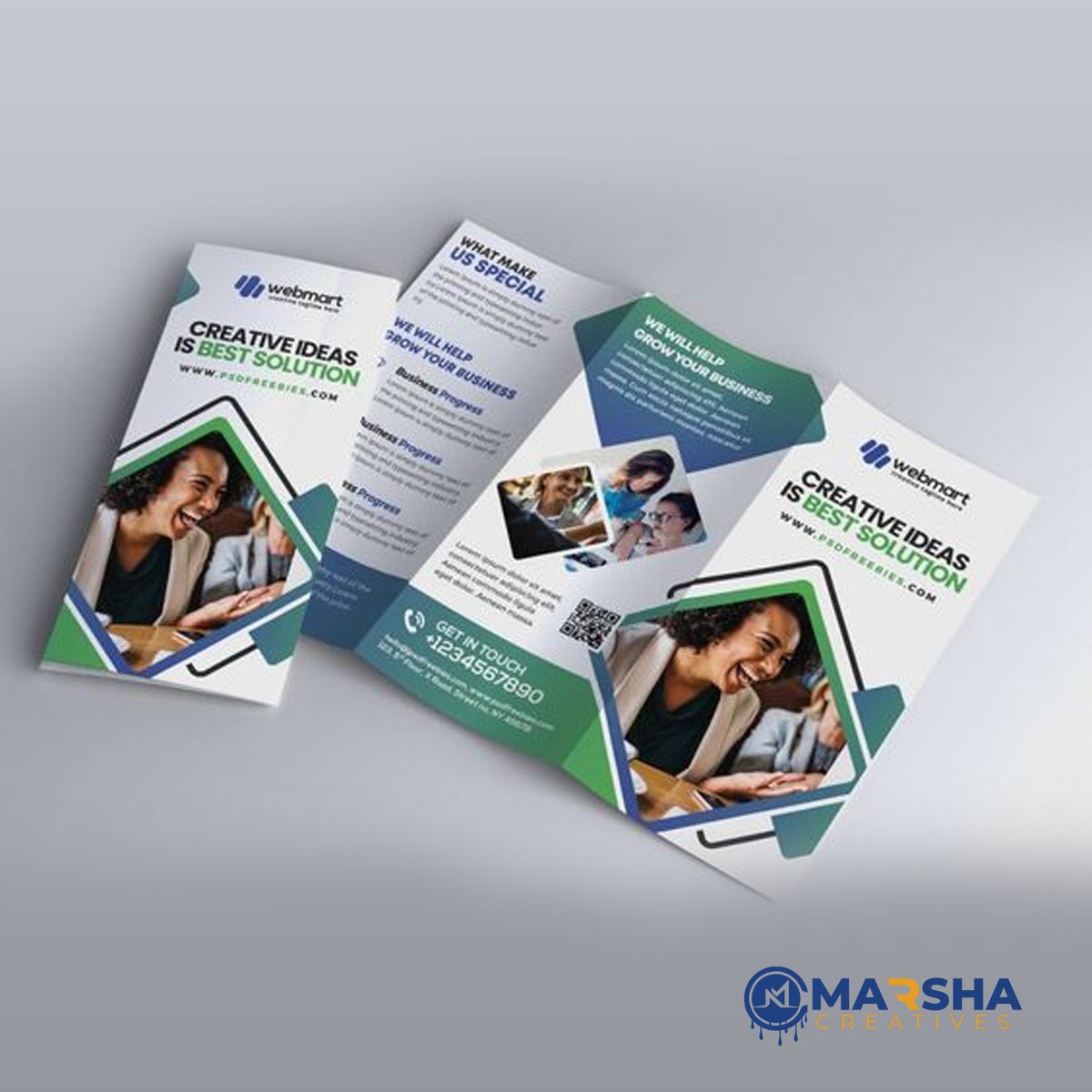
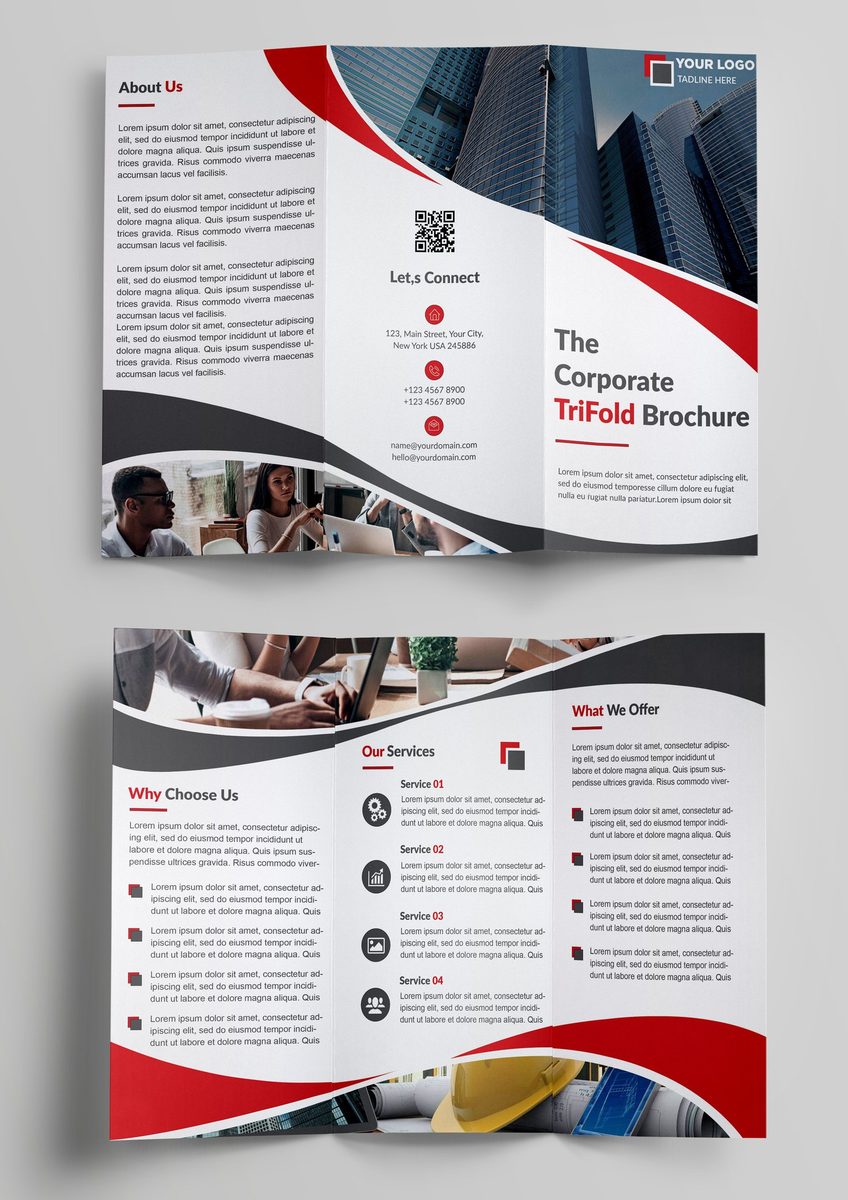
DL is also the third-panel size of a tri-fold leaflet, which is where most confusion starts. A tri-folded A4 becomes a DL-shaped leaflet, but it is not the same product as a DL card — one is folded from a larger sheet and needs fold marks and panel planning, the other is printed flat. Folding into three panels means the panel that turns inside must be about 2 mm narrower than the other two, otherwise the fold creases the edge of the closed leaflet.
Folds, and what they cost you in layout
| Fold | Result | Watch out for |
|---|---|---|
| Half fold | A4 becomes A5 | The fold line cuts the design in half — keep a 5 mm clear zone |
| Tri-fold (letter) | Right panel folds in first, then the left over it | That first panel must be narrower; the cover is the third panel |
| Tri-fold (Z / accordion) | Panels fold alternately, front/back/front | One panel reads upside down when opened — plan the sequence |
| Gate fold | Two panels meet in the middle | Nearly always needs a wider sheet; ask before designing |
If the flyer will be folded, say so at quoting stage. Folding changes the sheet size, the paper weight that will crease cleanly, and sometimes the price of the whole job.
Paper weight: what the number changes
- 130–150 gsm — the standard flyer stock. Cheap, prints well, creases without cracking, feels disposable. Correct for a mass handout.
- 170–200 gsm — noticeably better in the hand and resistant to curling. Good for A5 offers a business will keep on a desk.
- 250–350 gsm — card stock. It will not fold cleanly without scoring, so use it for flat pieces: rack cards, DL cards, invitations.
Finishing is where a cheap flyer starts to look expensive: matt lamination kills glare and fingerprints, spot UV lifts one element off the page, and a soft-touch finish makes an A5 card feel like a bank’s. Each adds cost, and each is easier to justify on 500 pieces than on 50.
How many to print
Print runs are priced in steps, and the step from 500 to 1,000 is usually much smaller than the step from 100 to 500 — the setup is the expensive part, not the paper. That is why a low first run often costs more per flyer than a sensible one.
A reasonable rule: work out how many you can genuinely distribute in six weeks, then print that number. A thousand flyers sitting in a store room are not marketing; they are a reminder that the distribution plan came second.
Artwork notes for each size
- Text size: nothing below 8 pt on A5 or DL. On DL, body text at 7 pt is technically printable and practically unreadable.
- Margins: 3 mm bleed, and keep text at least 5 mm inside the trim, because flyers are trimmed in a stack and the blade drifts.
- QR codes: at least 2 cm square on A5, larger on A4 if the flyer will be read from a distance, and always with a short caption — most people will not scan what they cannot identify.
- Colour: convert to CMYK before sending; vivid screen colours shift on paper. See how to prepare print-ready artwork.
Frequently asked
Which size is cheapest?
Per unit, A5 usually wins because two fit on a sheet. DL is close behind. A4 costs roughly double in paper and takes longer to trim.
Can I print two different designs on one run?
Yes, but they are priced as separate jobs unless both fit the same sheet and stock. Ask before assuming one price covers both.
Should I print flyers or a tri-fold leaflet?
If the content is one message and a call to action, print a flyer — they are cheaper and get read. If there are three or four distinct pieces of information (services, prices, a map, a profile), a tri-fold gives each its own panel without crowding.
Price is the other half of the size decision, and the full price list covers every flyer format we print.
Once the size is settled, the flyer printing prices guide explains what A4, A5 and DL cost and why quantity moves the figure more than the format does.
Send the size, the quantity and whether it will be folded, and we will quote it properly — see the flyer printing range or get a quote.